
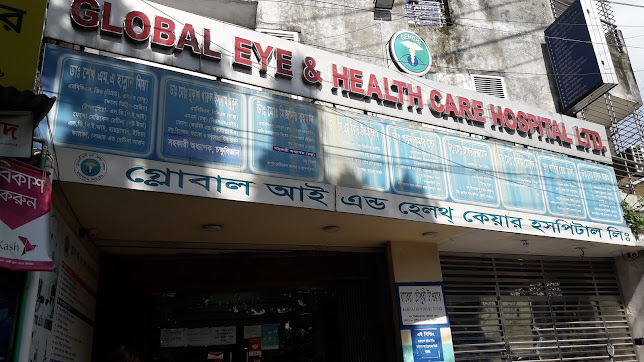
A Trusted Eye Care Hub in Northern Bangladesh
Located in Rangpur, Global Eye & Health Care Hospital Ltd. is a multi-storied specialized eye hospital that serves as the primary vision care referral center for a large regional population across northern Bangladesh.
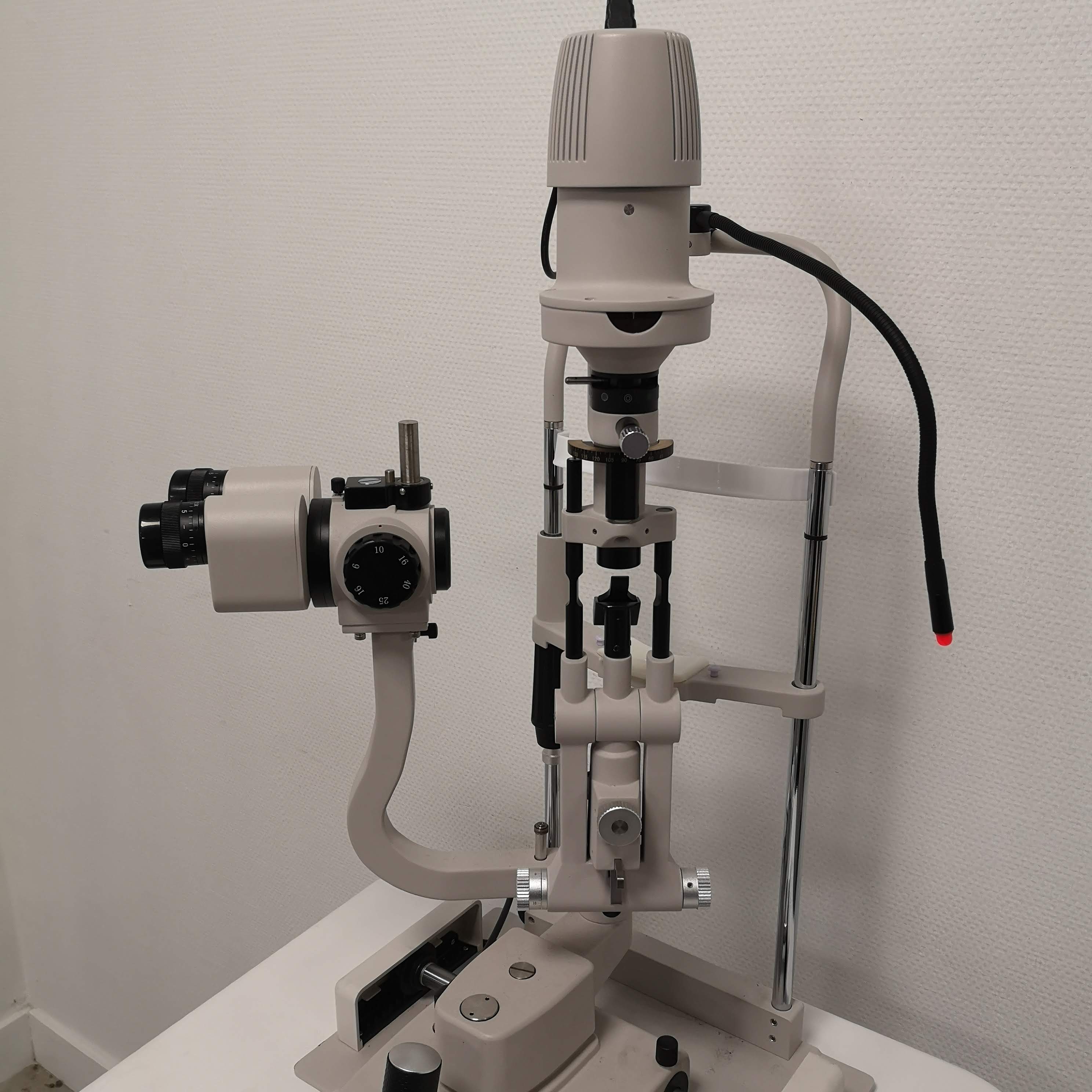
Led by experienced ophthalmologists and equipped with modern diagnostic and surgical infrastructure, the hospital handles the full spectrum of eye care: OPD consultations, diagnostic imaging (OCT, slit lamp), cataract (phaco) surgeries, retina and glaucoma management, and post-operative care. It plays a critical role in preventing blindness and restoring vision for a population that has few alternatives within reach.
Despite strong clinical capabilities, the hospital was running on operational infrastructure that couldn't support its growth. The clinical side was excellent. The software side was holding it back.
Growth Without a Digital Backbone
The hospital had been operating on a legacy Microsoft Access-based system — a tool built for a different era of healthcare. As patient volumes grew and surgical workflows became more complex, the cracks became impossible to ignore.
Patient data was scattered and inconsistent. OPD flow had no structure — patients moved through the facility based on verbal coordination rather than a digital queue. Reporting was minimal and manual. The system couldn't scale.
In a rural regional setting, the hospital also faced a shortage of trained IT and clinical technicians. Heavy dependency on manual coordination increased the chances of delays and errors at every touchpoint.
"Doctors had to personally manage phaco strips between surgeries. There was no visibility, no system — just trust and memory. That’s not how a surgical facility should operate."
— Hospital Administration, Global Eye & Health Care HospitalThe most critical operational failure was in surgical consumable management. Phaco surgery — cataract surgery using ultrasound emulsification — depends on precise consumables including phacoemulsification strips. These items were not tracked by any system. Doctors manually shared strips between procedures. There was no inventory visibility, no usage records, and no alerts when stock ran low. The result: confusion before surgery, potential delays, and ongoing cost leakage that nobody could quantify.
A Two-Phase Digital Transformation
In 2024, the hospital partnered with Medlogics with a clear mandate: build a fully digital, automated eye care ecosystem tailored precisely to ophthalmic workflows — not a generic hospital system repurposed for eye care.
Phase 1 (2024) — Foundation
- Digital patient registration replacing paper-based intake
- Structured Electronic Medical Records (EMR) with eye-specific templates
- Basic OPD workflow digitization — patient tracking from arrival to discharge
- Doctor consultation templates built specifically for ophthalmology
Phase 2 (2025) — Full Automation & Specialization
- Token-based patient flow with doctor-wise scheduling and real-time queue tracking
- Vision tracking (VA records), slit lamp findings templates, and cataract/retina workflow modules
- Pre-operative and post-operative structured data capture
- Phaco consumable tracking: per-surgery inventory, doctor-wise allocation, real-time stock visibility, automated low-stock alerts
- Technician workflow guides reducing dependency on highly skilled staff
- Automated billing across OPD, diagnostics, and surgical encounters
Solving the Phaco Strip Problem
Of everything Medlogics delivered, one capability stood out as transformative for this hospital’s day-to-day surgical operation: phaco consumable tracking.
Before the implementation, phaco strips — the single-use consumables at the heart of cataract surgery — were managed through informal doctor-to-doctor coordination. If a strip was used, it was tracked by memory. If stock ran low, nobody knew until it was too late. For a hospital performing multiple phaco procedures daily, this was a ticking operational problem.
Medlogics built a dedicated consumable tracking module that linked surgical scheduling directly to inventory. When a phaco procedure was booked, consumables were pre-allocated to that specific surgery and that specific doctor. Stock levels updated in real time. When inventory dropped below a configurable threshold, an alert triggered — automatically, without anyone having to check a spreadsheet or ask a colleague.
How the Hospital Runs Now
A patient arrives at Global Eye Hospital today. What happens next looks completely different from 2023.

- Registration in seconds — digital intake, no paper forms, patient record created instantly with a unique ID.
- Token issued — patient moves through a structured OPD queue, tracking their position in the system in real time.
- Doctor consultation — findings recorded in ophthalmology-specific EMR templates: visual acuity, slit lamp results, IOP readings, fundus notes.
- Surgery scheduling — if a cataract procedure is required, it’s booked directly from the consultation screen. Consumables are pre-allocated automatically.
- Inventory confirmation — the system confirms availability before the surgery is confirmed. No manual stock check needed.
- Automatic billing — the encounter generates a complete bill: consultation fee, diagnostics, surgical costs. One click, fully itemized.
Nothing is lost. Nothing is guessed. The system guides every step.
What Changed After Medlogics
The transformation touched every dimension of the hospital’s operations — clinical, financial, and human.
Operational efficiency improved measurably: patient processing is faster, waiting times are down, and the OPD flow that once relied on verbal coordination now runs on a structured digital queue. Staff spend less time managing paperwork and more time on clinical tasks.
Clinical accuracy improved through standardized documentation. Every consultation follows the same structured template. Patient histories are complete and accessible. Surgical planning is informed by structured pre-operative data rather than fragmented notes. Follow-up tracking is built into the workflow, not left to memory.
Inventory management went from a persistent operational risk to a solved problem. The surgical team no longer coordinates consumables manually. Stock levels are always known. Automated alerts prevent stockouts before they happen. Surgery delays caused by missing consumables dropped to zero.
Financial performance improved through billing accuracy and reduced leakage. Every service generates a corresponding billing record automatically. Revenue that was previously lost to missed charges or unrecorded diagnostics is now captured.
Human resource dependency decreased. Guided workflows inside the software reduced reliance on highly skilled technicians for routine tasks. New staff reach operational competency faster. The hospital can grow its team without proportionally growing its training overhead.
"Global Eye Hospital didn’t just adopt software. It transitioned from a doctor-dependent system to a system-driven hospital."
— Medlogics Implementation Team, 2025Domain-Specific Engineering, Not Generic Software
What made this implementation successful wasn’t just technology. It was precision. Medlogics didn’t deploy a generic hospital management system and ask the eye care team to adapt. It built eye-care-specific workflows from the ground up.
Visual acuity tracking, slit lamp templates, cataract module sequencing, phaco consumable allocation — these aren’t features you find in an off-the-shelf HMS. They exist in the Medlogics platform because the team spent the time to understand what ophthalmic care actually requires at the point of clinical delivery.
The phaco strip tracking problem is a perfect example. It’s not a problem any generic software vendor would even recognize. But for a high-volume cataract surgery center, it’s one of the most operationally significant problems in the building — and Medlogics solved it.
Medlogics didn’t just digitize Global Eye Hospital. It transformed it into a modern, efficient, and scalable eye care ecosystem — built to grow with the population it serves.