
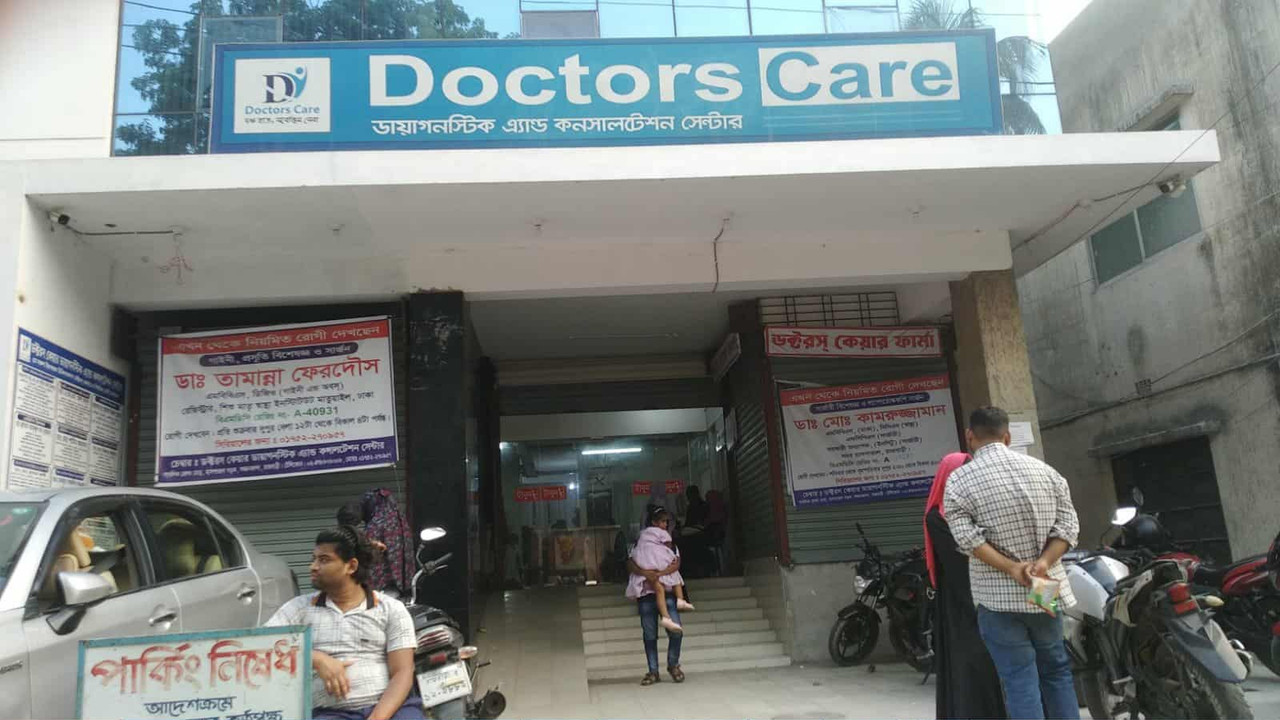
A Trusted Multi-Service Care Center in Rajbari
In Rajbari, Bangladesh, gaps in public-sector healthcare access created growing pressure on private providers. The district’s main government hospital could not always meet the full volume and speed of outpatient demand — so a number of private diagnostic labs and consultation centers emerged to serve local communities.
Among them, Doctors Care became one of the most active and trusted names in the area. Operating from a multi-storied building in Rajbari, Doctors Care provides consultation and diagnostic services for a large patient population, especially for people traveling in from nearby rural areas.
By combining medical consultation, diagnostics, and pharmacy support under one operating model, Doctors Care grew rapidly. Over recent years, the organization experienced nearly 300% growth — and that growth created an urgent need for better structure, better tracking, and better coordination. That is where Medlogics CareSphere came in.
Why Private Providers Grew in Rajbari
Rajbari’s healthcare reality is familiar across many developing regions. The public hospital system carries a high patient burden, many patients come from rural areas and need faster access to consultation, diagnostic demand has increased sharply, and patients prefer places where consultation, testing, and medicine access are closer together.
As a result, the private sector expanded — especially in the form of consultancy chambers, diagnostic labs, and pharmacy-connected care points. Doctors Care emerged in this environment as a scalable private-sector healthcare service point focused on consultation, diagnostics, and patient convenience.
"When rural patients travel for care, time and coordination matter. Disconnected paper processes stop working as soon as diagnostic volume rises."
— Medlogics Implementation Team, 2023Growth Outpacing Operating Discipline
As patient volume increased, manual and semi-manual processes began to slow the organization down. A business can grow 300%, but if systems do not grow with it, staff pressure, data inconsistency, and reporting gaps follow.
Key Operational Issues
- Billing bottlenecks: Manual billing and accounts work created delays, increased reconciliation effort, and made financial tracking harder than it needed to be.
- Unmanaged patient flow: With hundreds of patients daily, serial management of appointments and consultation order became critical. Without a structured system, waiting experience could quickly become disorganized.
- Disconnected workflows: Prescription, lab, and pharmacy activities were not tightly connected. Linking those three to a single patient record was essential for speed and accuracy.
- No scalable reporting: Financial and operational reporting relied on manual effort, creating growing blind spots as volume increased.
A Phased Digital Transformation with Medlogics CareSphere
In 2023, Doctors Care started using Medlogics CareSphere to support a more scalable model of care. The goal was not to become a large inpatient hospital — it was to become a well-organized, technology-enabled consultancy and diagnostic center that could handle rural patient volume with consistency.
Phase 1 — Billing and Financial Automation
Doctors Care began with billing automation — the most immediate pressure point.
- Consultation billing became faster and more consistent
- Financial accounting reduced manual hassle
- Transaction tracking improved across the organization
- Day-end and monthly reporting became easier to manage
Phase 2 — Patient Serialization and Activity Tracking
Once billing stabilized, the next priority was patient movement and activity visibility.
- Serialized patient appointments and queue management
- Consultation activity records and visit-level service tracking
- Real-time view of who was waiting, who had been seen, and next service steps
For a center seeing 430+ patients daily, serialization is not a luxury — it is operational survival.
Phase 3 — Connected Consultation, Lab, and Pharmacy Workflow
The major improvement came from connecting the patient journey more tightly across all service lines.
- Doctor consultation generates a prescription within the system
- Diagnostic requirements linked directly to the patient record
- Pharmacy support works from the same service context
- Reduced fragmented handoffs and process errors in high-volume workflows
Reliable, Local, and Built for Bangladesh’s Reality
Doctors Care now runs on an on-premise server environment, available 24/7 within the facility, with secure synchronization to support data continuity.
- Local operations do not depend on unstable internet connectivity
- Patient records remain accessible inside the premises at all times
- Data synchronizes securely for backup and continuity
- Better protection against device-level data loss
Rather than claiming a flashy “fully cloud-native smart hospital,” the stronger and more realistic story is this: Doctors Care built a dependable digital backbone suited to local infrastructure conditions. In Bangladesh’s operating reality, where connectivity and power can be inconsistent, this approach is not a compromise — it is the right architecture.
What Changed After Medlogics
Better financial control. Billing automation reduced manual burden and improved financial transparency across consultation, diagnostics, and pharmacy revenue streams.
Higher patient-handling capacity. With organized serialization and workflow support, Doctors Care became better equipped to handle 15,000+ monthly patient visits without proportional increases in administrative overhead.
Better coordination across services. Consultation, lab activity, and pharmacy support became more connected, reducing friction between departments and minimizing simple process errors common in high-volume, paper-heavy environments.
Rural patient convenience improved. Patients coming from outside town benefit from a more structured and predictable service experience — shorter waits, faster billing, and connected service delivery under one roof.
Scalable private-sector growth. Technology helped turn rapid growth into manageable growth. The 300% expansion that once created operational strain now has a digital infrastructure capable of supporting continued scale.
Old Model vs. New Model
| Dimension | Legacy Model | Doctors Care with Medlogics |
|---|---|---|
| Billing | Manual or semi-manual | Automated and trackable |
| Patient Flow | Queue confusion possible | Serialized appointments |
| Consultation to Lab | Fragmented handoff | Connected workflow |
| Prescription to Pharmacy | Manual dependency | Better service continuity |
| Data Availability | Localized/manual records | 24/7 on-premise access with secure sync |
| Growth Capacity | Limited by process bottlenecks | Better prepared for continued scale |
Practical Technology for Real Operational Conditions
Doctors Care’s transformation is important not just because of software adoption, but because it reflects a broader healthcare shift in Rajbari and across developing regions: when public-sector capacity is limited, private providers must become more efficient.
Medlogics CareSphere helped Doctors Care respond to that reality with a practical digital model — not a theoretically ideal one. The phased approach, the on-premise architecture, and the focus on billing and flow before advanced clinical modules reflect how healthcare digitization actually works when it sticks.
Doctors Care didn’t just adopt software. It built a digital operating model suited to the volume, the infrastructure, and the patient population it serves.